Hello, dear friends.
I have always been a worrier. It seems like everyone in my family is worriers. At times, I have wondered if the worrying is epigenetic in nature — if it is inherited trauma from my ancestors.
Or perhaps worrying is part of the human condition? Maybe humans who worried more were able to circumvent catastrophes and survive long enough to pass along their worry-filled genes.
Sometimes a part of my mind wants me to believe that I’m a freak for worrying. I recognize that part as my inner critic. It sees worrying as an opportunity to stick its wormy little nose in and rewrite stories about my life, guess what other people must be thinking about me (it’s always bad), and sometimes it even creates entire crystal-ball proclamations about impending doom and disasters that will inevitably strike. If I’m not careful, my whole nervous system will quickly enter fight or flight mode as I start planning for every worst case scenario.
In the past, this type of discomfort was something I would definitely drink to avoid.
Yesterday I had two dear friends over for dinner. Before we ate, we took my dogs on a walk in the woods. We marveled at the carpet of phlox, trout lilies, and larkspur covering the forest floor. The dogs were smiling, chasing squirrels, and taking breaks to lay down in the shallow, flowing creek. Later we went into my garden and hunched over a vibrant patch of stinging nettles, carefully cutting the tops and grabbing the ends of the leaves to avoid getting poked by the irritating trichromes. We were objectively safe. My body was still activated, the state of worry was all throughout me.
I stopped to ask my friends, “Do y’all ever feel like this? Does your brain ever write stories about how everything is probably going to go wrong? That the most likely outcome is impending doom?”
They both agreed. Yes. We all feel this way from time to time.
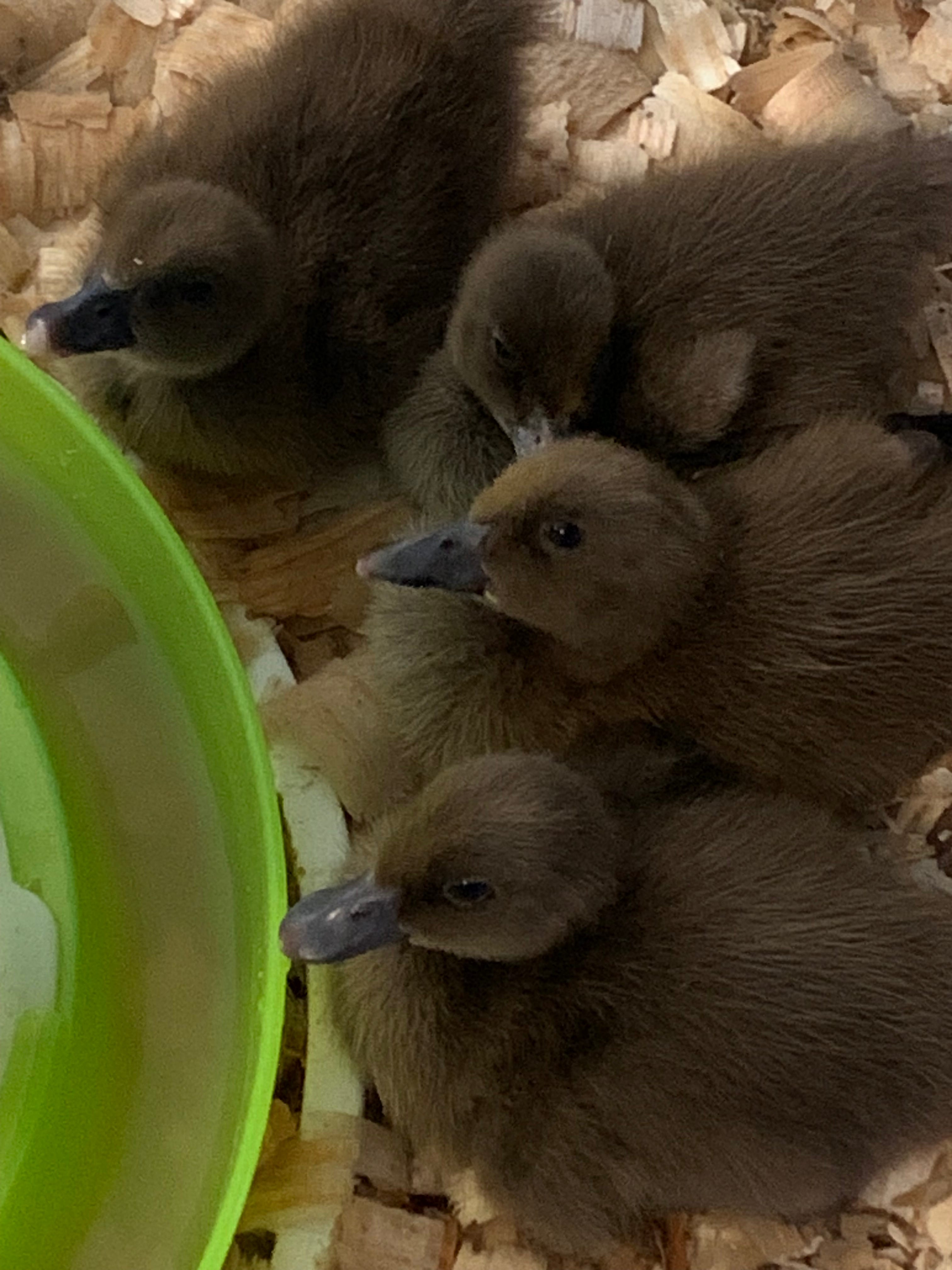
As we continued our evening together, we oscillated between stories of our travels, marveling at baby ducklings in their kiddie-pool brooder, and occasionally dipping back into our ongoing narrative — why do we worry, and how can we help ourselves?
We discussed the book Nonviolent Communication by Marshall B. Rosenberg, and the skills we have learned about how we talk to ourselves. Do we meet our worry with hate and shame? Is it possible to water the seed of compassion inside of us instead? If worrying is not our own personal failure, but instead a normal facet of the human condition — can this allow us to be more aware, and more gentle with ourselves?
Zen Buddhist teacher Thich Nhat Hanh describes interacting with our thoughts like watering seeds in the gardens of our mind. If we see the worry and latch onto it, getting carried away entirely, and later find ourselves in fight-or-flight mode as we plan for every worst case scenario, this is watering a mental seed. If instead we acknowledge that we can’t predict the future, and we can’t read other people’s minds, we are watering a seed of compassion and empathy inside of us. Our mental garden will grow accordingly.
What seeds are you watering?
May you be happy and free, dear reader.
Announcements and such:
Want to support this work? You can subscribe to this Substack for $8/month, Join our Patreon for $3/month (podcast bloopers and exclusive content!), or donate via our website in any amount. We are a 501c3 nonprofit, so all your generous donations are tax deductible!
This week on the podcast, we have Jacob. He talks about how anxiety, AuDHD, and chronic pain led to his opiate addiction, and how music brought him back. He also tells one of the absolute craziest stories I have ever heard. Y’all don’t want to miss this one! Click here to listen!
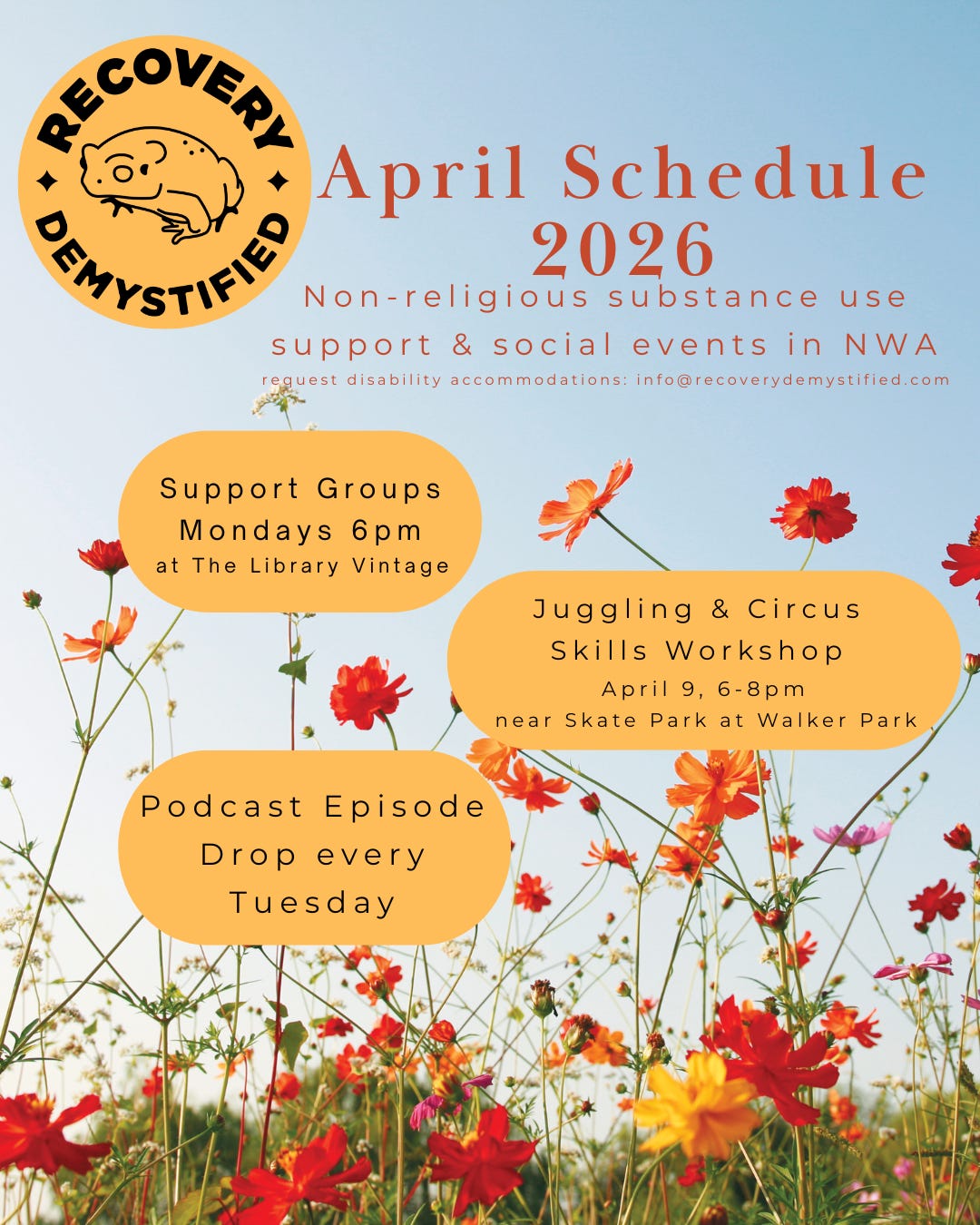
Support groups are still every Monday at 6pm at The Library Vintage in Fayetteville, AR.
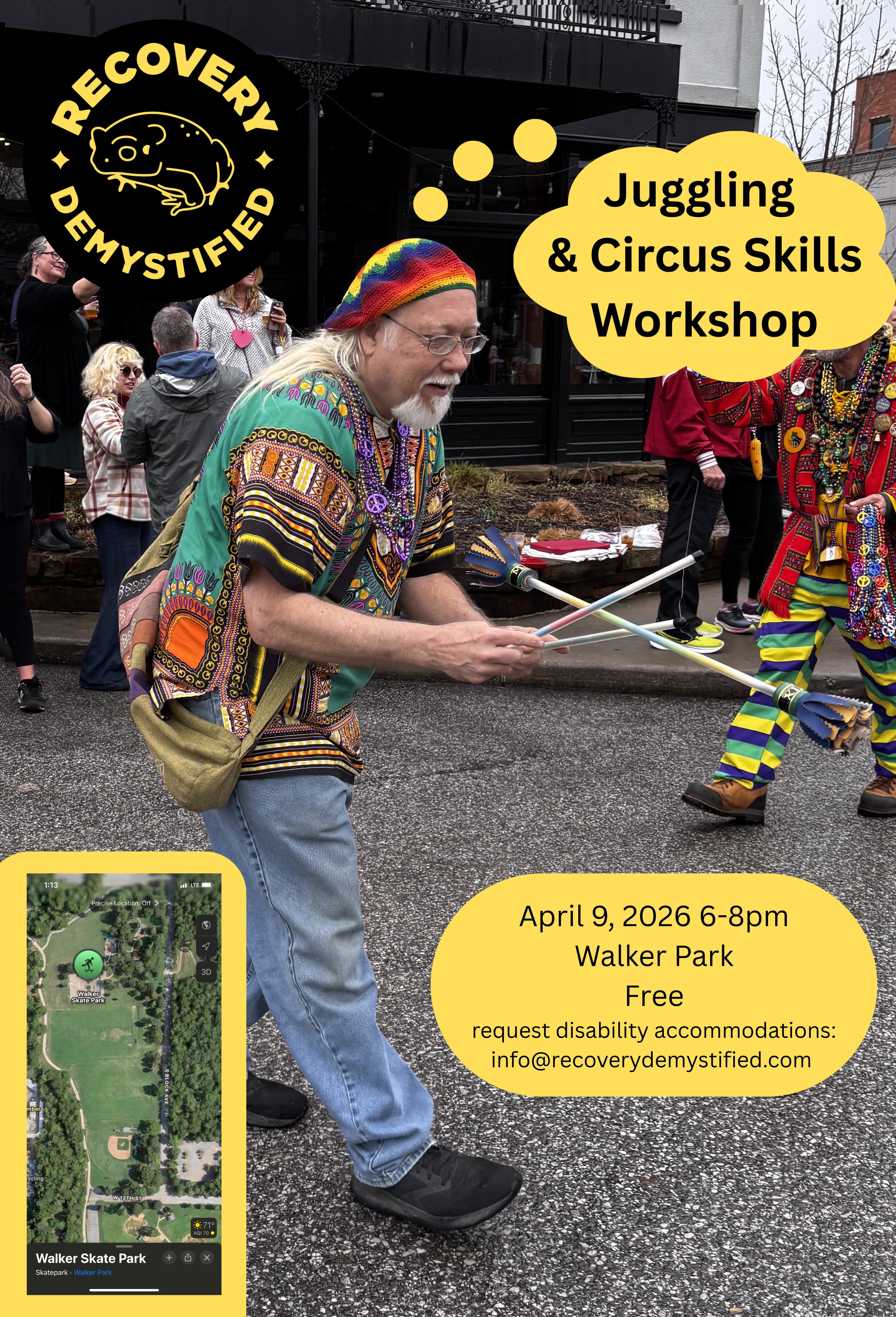
Check out the flyer for the Juggling and Circus Skills workshop our friend Chip is putting on in April! We are so stoked to have such a fun sober event on the calendar!