Hello, dear reader. I’ve been thinking a lot lately about basic needs and recovery. Often times when people contact me in some sort of state of activation, fear, or crisis — I ask first about their basic needs. This can seem counter-intuitive because the story we tell ourselves is that the problem is in conditions that are outside of us. When we are freaking out, really want to drink/use, or are highly activated, it can seem like the answer is to change some sort of outside circumstance. For example, if we are stressed due to an interpersonal conflict, or family drama, or work chaos, we might think we have to remedy those situations in order to regain peace. Unfortunately, if we use substances to escape our discomfort, the itch remains. Why is that?

As we fall further down the rabbit hole in substance use and addiction, we increasingly seek to escape and suppress difficult emotions. Our brain learns that using substances is an immediate way to self-soothe, so it increasingly offers this to us as a solution. We get caught in a neurological feedback loop of craving and withdrawal. The discomfort of the withdrawal leads to an old familiar impulse — use again to make it go away. Make it all go away, now, please. Soon, the answer to every discomfort is drinking/using. Eventually, we unlearn interoception, which is our ability to understand what the sensations in our body are trying to tell us about how to meet our basic needs.
This brings me back to my method of helping people when they reach out to me in crisis. Even though they might be explaining the problem as a story that is outside of themselves, my first line of defense is to check in on their basic needs. Often times, when we are upset/triggered/craving, we lose touch with our self-care. Regular restful sleep, hydration, food, movement, rest, and balanced socializing and alone time are massively important and affect our resilience and mood. I check in on those needs in that order.
Sleep is the foundation of health, affecting every system in our body, including our mood. Water and food can make an immediate tangible difference to someone in crisis, and sometimes it’s important to find things we can eat even when we don’t feel hungry. Next, we often have an imbalance of rest and movement. Either staying still too long or go-go-going too much can be detrimental to our mood and health. Finally, and especially for us neurodivergent people — we need to find a balance between socializing and alone time. It’s easy to over-do it on both ends and have that contribute to craving substances to escape the discomfort.
Time and time again, when I see people tend to their basic needs as a frontline method of emotional first aid, I see immediate and tangible improvements. It’s like watching a sunflower open. I can see the tangible relief and peace as they begin to care for themselves again.
So I ask you, dear reader, when you feel unwell — are you prioritizing caring for your basic needs? If not, give it a try and see what happens.
May you be happy and free, dear reader.
Announcements and such:
Want to support this work? You can subscribe to this Substack for $8/month, or donate in any amount via our website.
Interested in escaping the feedback loop? Book a free 20 minute Recovery Coahing call with me. Click here for more information.
Support groups are still every Monday at 6pm at The Library Vintage in Fayetteville, AR.
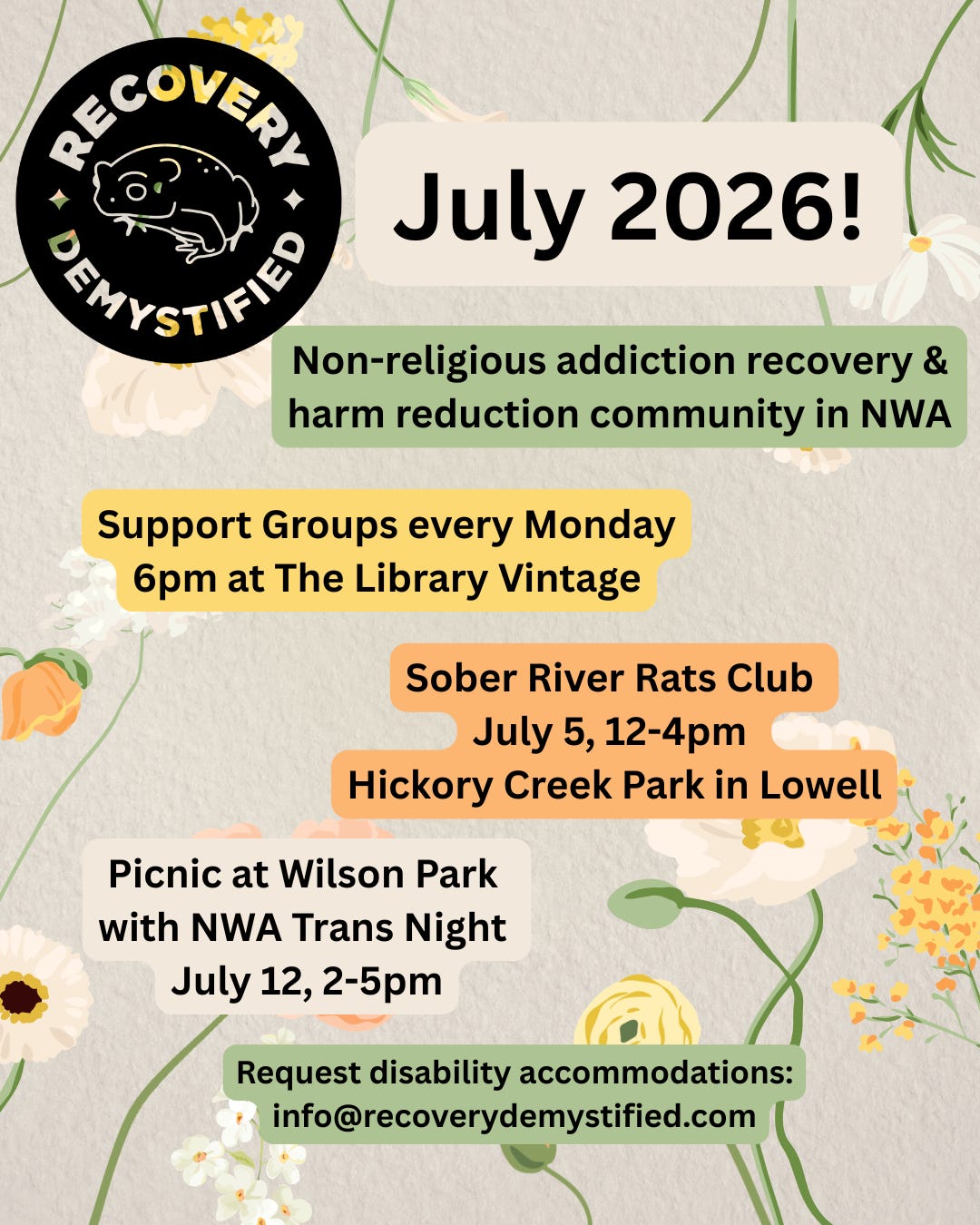
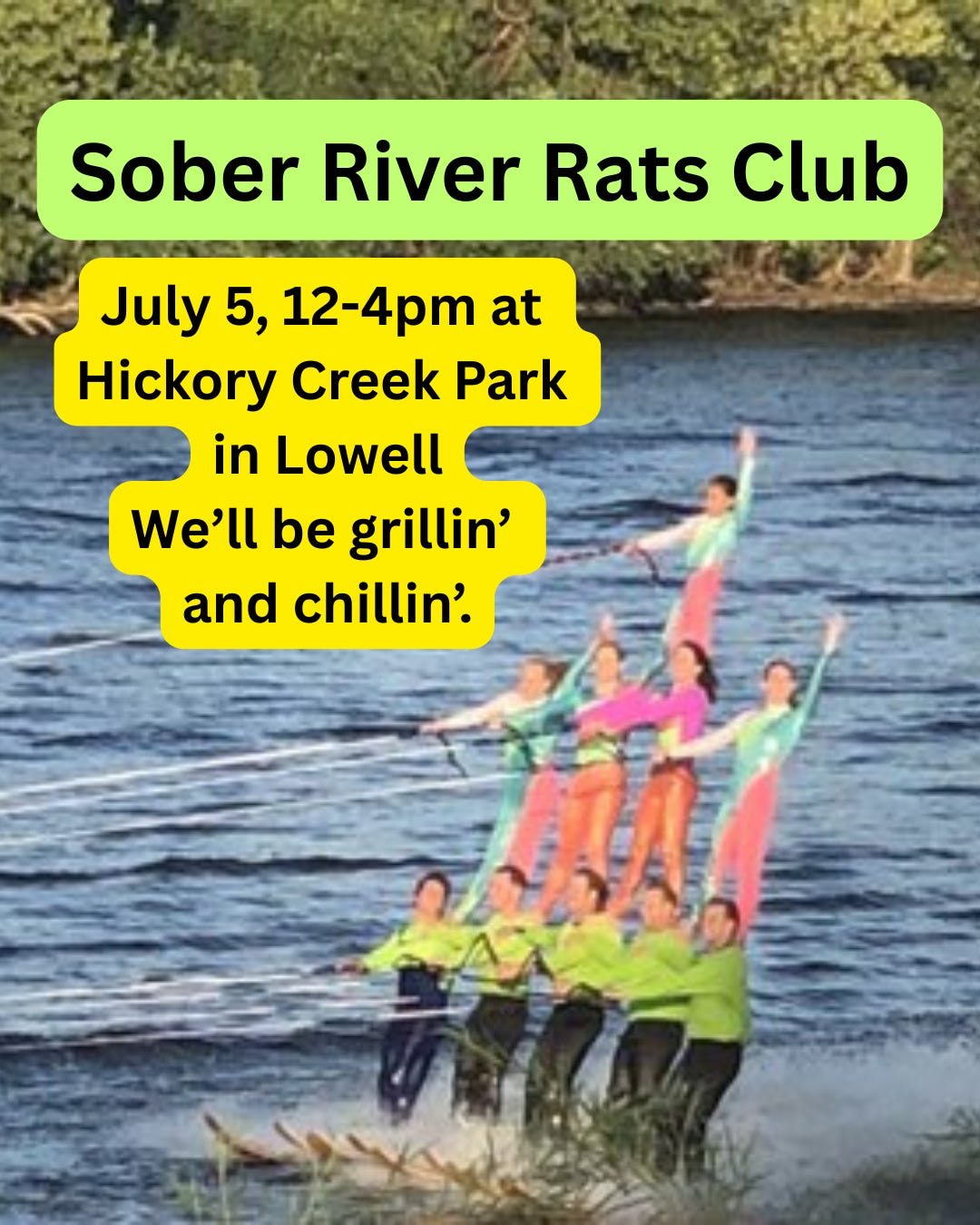
We have fun sober events coming up the next couple Sundays! See flyers below for details.
This week on the podcast, I talk with Meesh Mori about the little known roots of Liberatory Harm Reduction. Click here to listen!