Hello, my friends. I decided I would like to return to writing with more regularity, and I hereby commit to a new schedule of reaching out to you every other Saturday. I was on a hiatus after starting a carpentry job that had me working on Friday mornings, which was my previous email transmission time. I was overwhelmed for a while, but things have shifted a bit, and I am ready to do this consistently again.
That there? That’s setting me up for accountability. I just told y’all I’d be committed to doing something, which means I have eyes on me if I don’t show up.
Accountability gets a bad rap as being the same as policing. The magic here is that accountability can be primarily internal, but it’s effective because we know that people are watching. How this works with substance use is something that Paul Churchill calls “burning the ships.”
“Burning the ships” means telling people around you that you’re re-evaluating your relationship with substances, or that you’re quitting entirely.
The way accountability works doesn’t have to do with other people controlling our behavior, punishing us for acting out of alignment, or needing to investigate if we are living up to our goals. The effect is much more subtle. It has to do with knowing we put our intention out into our support network, and feeling the watchful eyes of those around us. Sometimes just communicating our goals with other people can help keep us on track because we know people who care about us are watching our behavior.
This can work for staying in our addictions as well. If we don’t tell others that we are taking a step back from substances, they will implicitly expect us to continue to act in our previous patterns. Not burning the ships keeps us accountable to our addictions.
We don’t have to ask others to police our behavior for accountability to work. It’s an intention, a wish, a goal spoken unto the world which increases our strength inside of ourselves.
It’s not the only tool we use when we address our use of substances, but it can be profoundly effective to have that good peer pressure. When people expect us not to drink/use, that puts fuel in our tanks to live up to that promise.
So if I don’t show up two Saturdays from now, I don’t expect y’all to be knocking down my door. But — just telling you I’ll be here lights the fire under me to show up because I said I would show up.
May you be happy and free, dear reader.
Announcements and such:
Want to support this work? You can subscribe to this Substack for $8/month or donate in any amount via our website.
This week on the podcast I talk with punk elder Sascha Altman Dubrul of about weed, psych drugs, and radical mental healthcare. Click here to listen.
We now have a free Patreon community for like-minded folks to connect. Click here to join us.
I’m still doing 1:1 Recovery Coaching with folks. I’d love to meet you. Click here to schedule a free 20 minute strategy call.
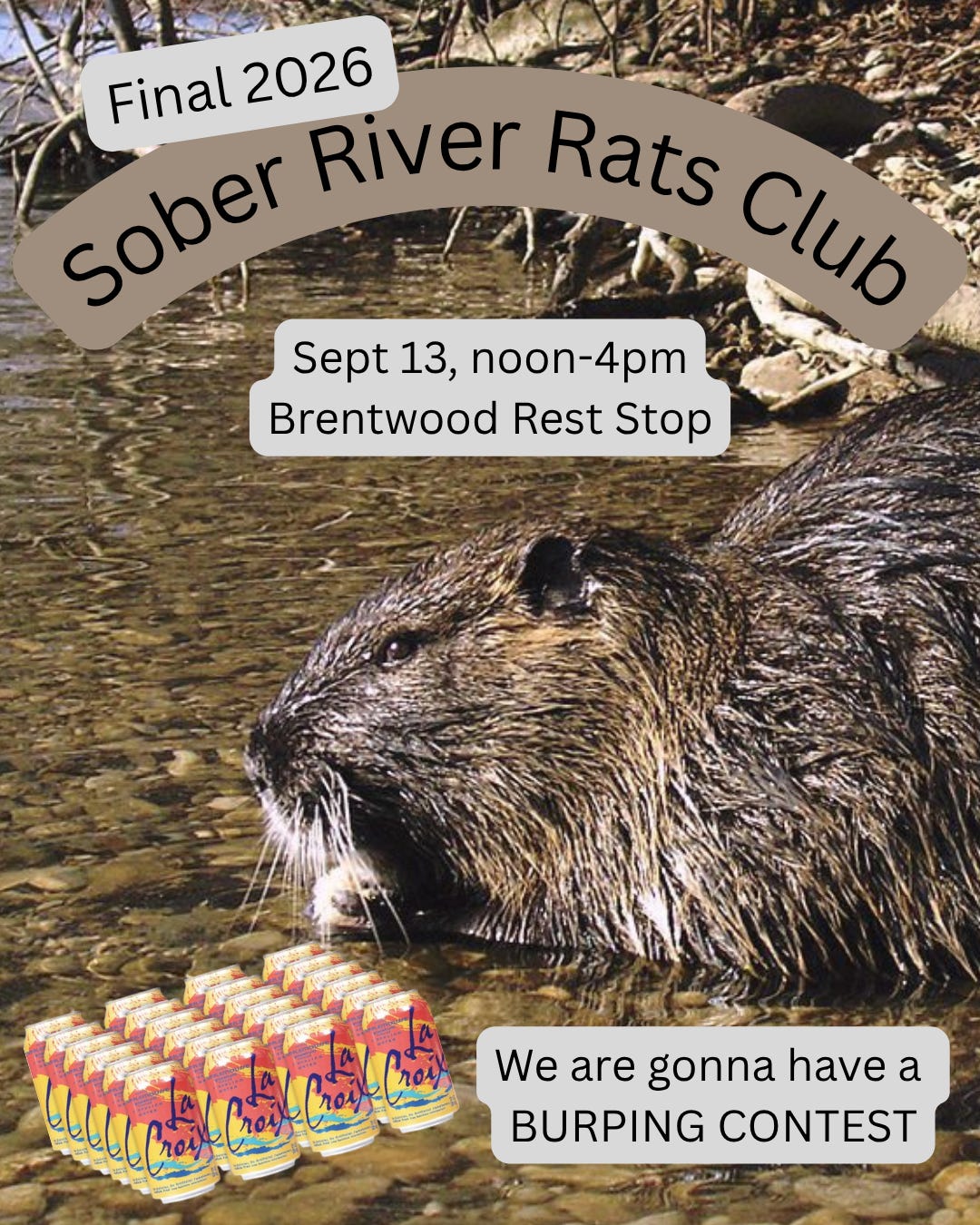
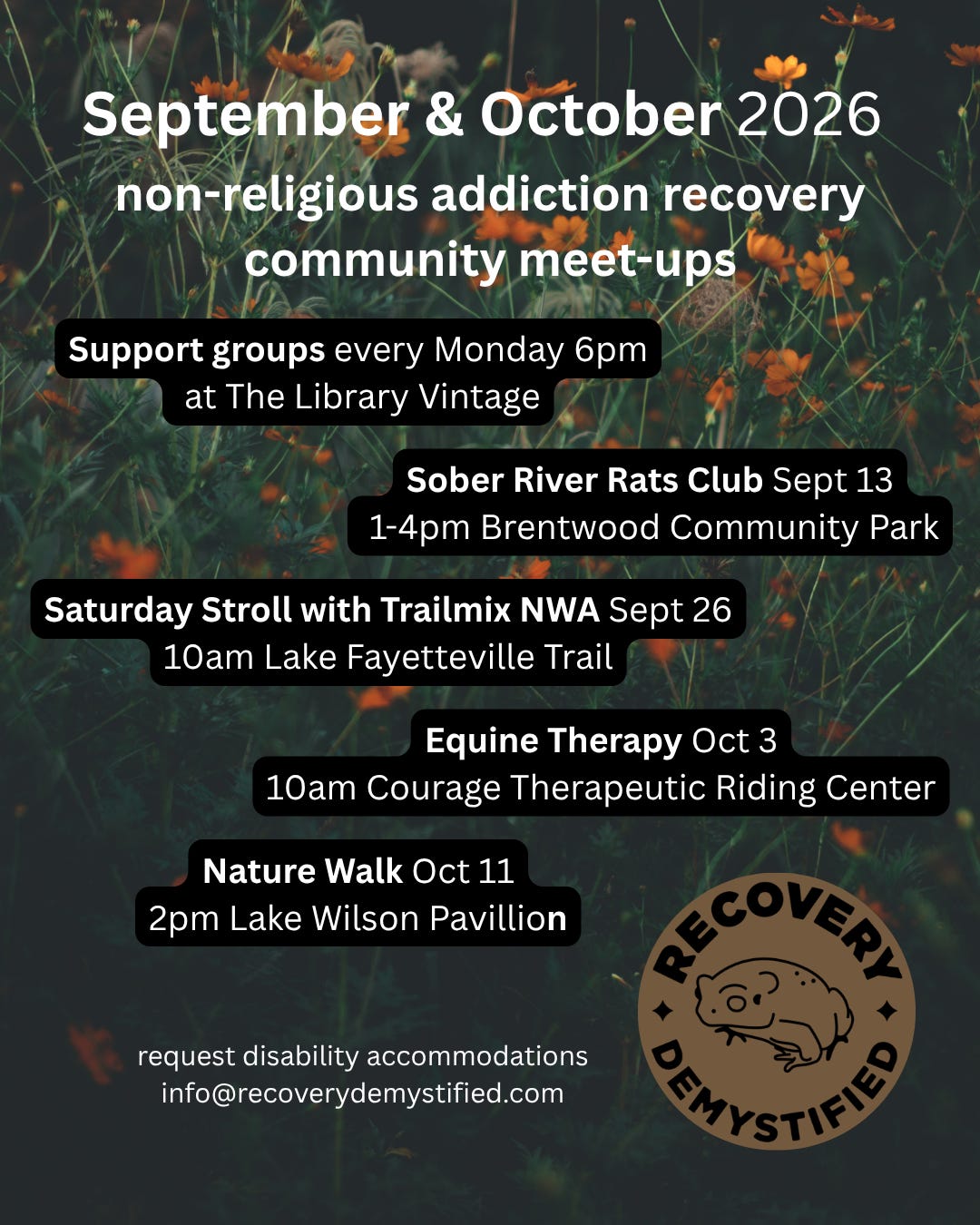
The FINAL Sober River Rats Club of 2026 is next Saturday, 8/13. See flyer for details!
Support groups are still every Monday at 6pm at The Library Vintage in Fayetteville, AR. We now have a rotating group of facilitators!