Last week at our support group, we discussed what it means to deserve unpredictable things — like health problems. Personally, I struggled with this thought after a colonoscopy turned up some pretty scary results: pre-cancerous polyps.
Alcohol is a carcinogen, and the American Cancer Society recommends drinking, well, no alcohol at all. For more information on alcohol and cancer, click here.
My colon has seen metric fuck ton of alcohol. I must deserve butt cancer??
Sure. I put the alcohol in my body. But where does the moral leap come from? Why is my inner critic so vicious in its messaging that my addiction is a crime deserving punishment? And why, after years of sobriety, am I being cursed with this problem? Shouldn’t I be absolved by now?
I invite everyone to sit and listen to the inner critic. Listen to its language and delivery. What does it sounds like? Your parents? The church? The “criminal justice system”?
The inner critic is an amalgamation of the messaging you have heard throughout your life, and it is culminated subconsciously into one rude little messenger. The carceral system/prison industrial complex teaches us that actions which cause harm deserve punishment. If we are to take an abolitionist view on all systems of human life, we must apply this to our inner landscape as well. We must destroy our inner cop. Actions which cause harm should be addressed — with an end goal of healing, not punishment. Discipline is alienating and demoralizing, and tears down our sense of self-worth. I invite everyone to see harm as an opportunity for healing and growth instead of automatically penalizing ourselves or others. We all cause harm, and that doesn’t make it ok, but the ubiquity of injury to self and others requires a more mature stance than simply: “Bad! Punish! No good!”

If we are able to address the ubiquity of humans causing harm with compassion, we can start to see it as an opportunity to heal and grow.
The other hegemonic force that subconsciously creates our inner critic is Christianity. The underlying themes here are that our harm is “sin” and the big man in the sky is here to moralize our every move and decree upon us that we must burn in hell. It is time to dig up this internalized shame at the root. There is no good and evil, heaven or hell. We are accountable for and in control of our actions. We may not always act entirely in alignment with our morals, and when that happens, we have the power to repair the harm to the best of our abilities. We are humans — imperfect, loving, and connected. Listen to the inner critic’s dogmatic tone and tendency to speak in extremes. This is the subconscious root of Christian indoctrination, and once we are aware of this, we no longer need to listen to its persistent messaging that we are “bad” or “evil” or “deserve punishment.”
The invitation here is to let go of the idea that we deserve punishment, and become open to the idea that we are worthy of healing.
By definition, “deserving” and “worthy” are synonyms, but the connotation is a bit different in my mind. “Deserving” implies an outside force or judgement, while “worthiness” comes from within. If we can tune into the messaging of the inner critic and decide that we will no longer believe what it has to say — a beautiful thing happens. We can become open to the possibility that we are worthy of healing. Nothing needs to change about our imperfect selves for us to be worthy of life, love, and happiness. Our value of ourselves comes from within. When we lead from a place of radical self-love, we can radiate this healing out into our community. With our cup full of self-worth, we can pour into the cups of our loved ones.
We are still accountable for the harm that we cause, but now it is an opportunity for healing and growth instead of punishment and isolation.
May you be happy and free, dear reader.
Announcements and such:
This week our podcast episode is on how to find a therapist if you’re poor and/or neurodivergent. To listen, click here.
Want to tell your story on our podcast? Send an email to info@recoverydemystified.com
Want to support this work? You can subscribe to this Substack for $8/month, or donate in any amount (with a new monthly donate option!) on our website, https://www.recoverydemystified.com/donations/
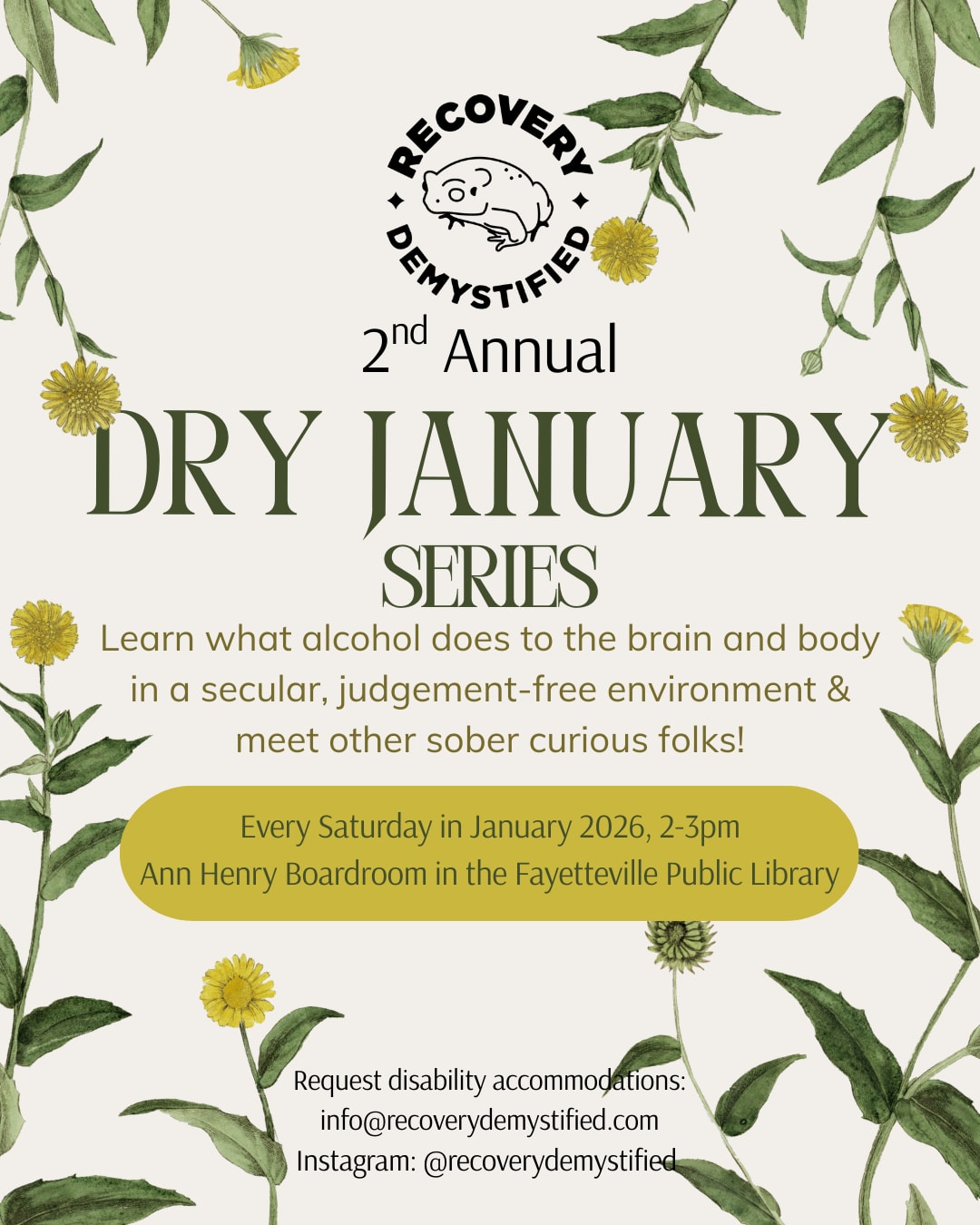
Dry January is coming up! See flyer for more details.
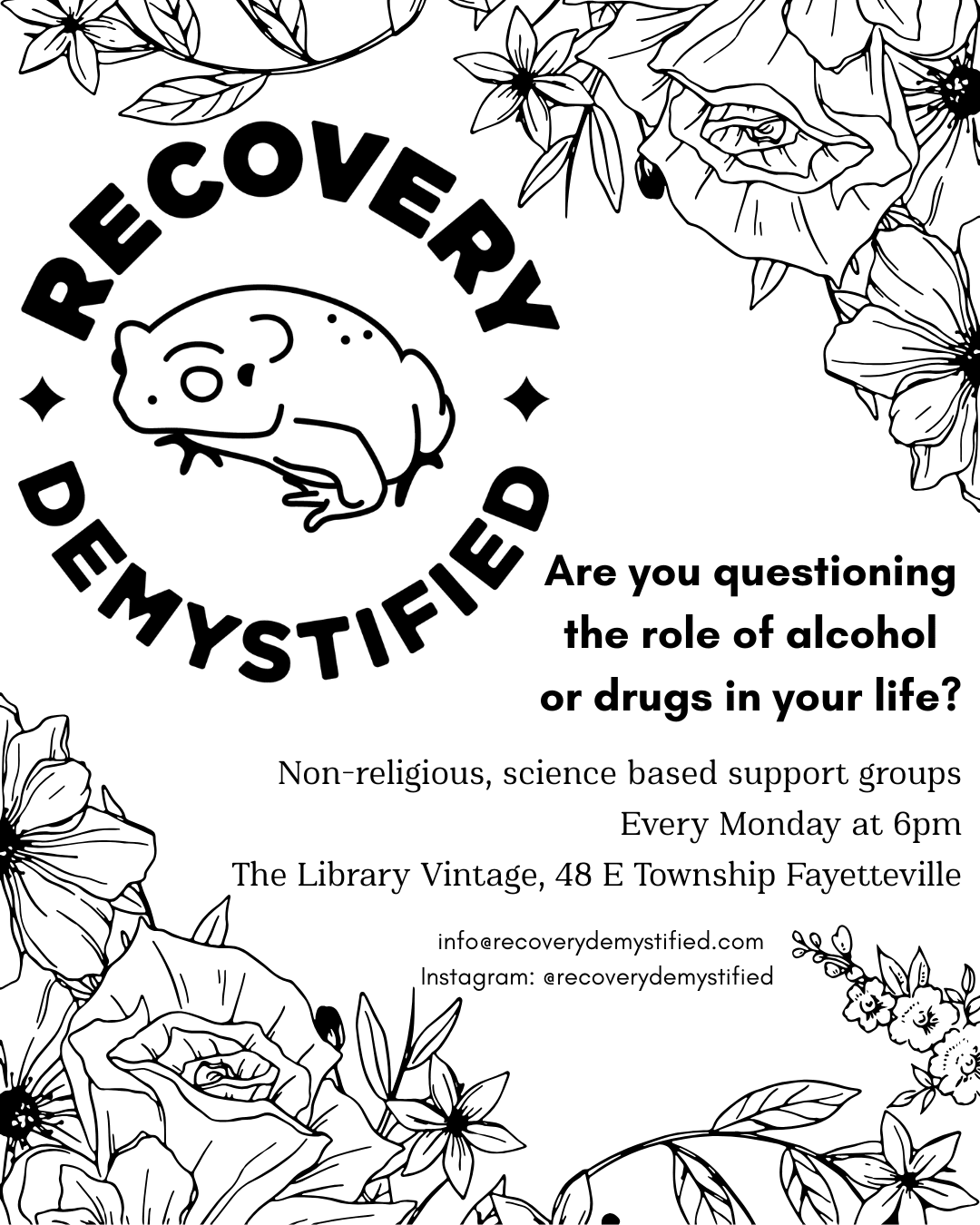
Support groups are still every Monday at 6pm at The Library Vintage in Fayetteville.